

Bakeries and pastry shops
Bakery software for recipe costing, ingredients and waste
A bakery's margin is written in its recipes: grams of butter, flour and sugar multiplied by today's prices. Wox keeps those recipes tied to what you actually pay, and makes unsold product a number you can work on.
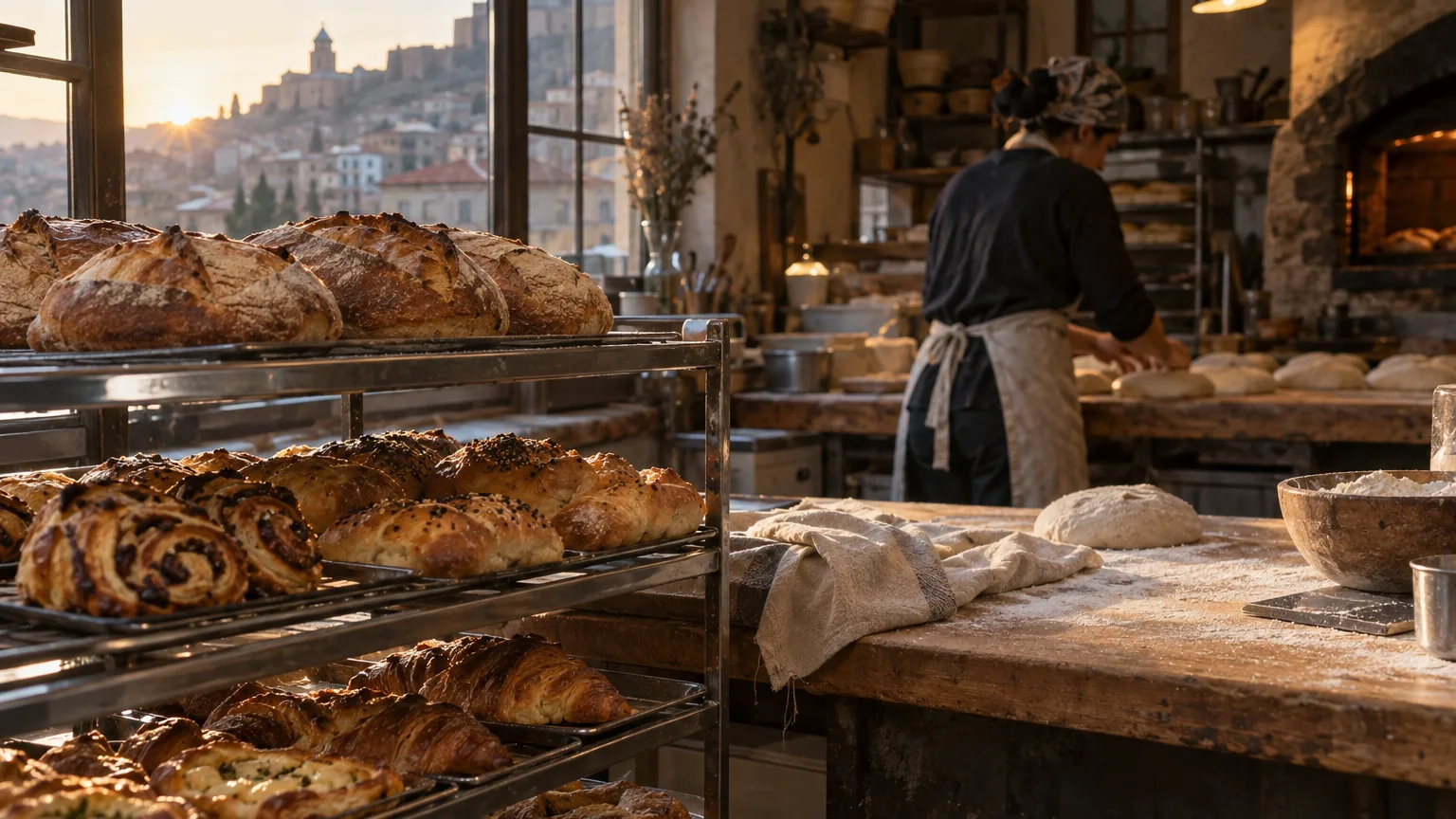
By six in the morning a neighbourhood bakery has already done half its work. The shotis puri is out of the tone, the khachapuri trays are in the oven, and the pastry cream for the éclairs has been made and cooled. By the time the first customer walks in, most of the day's costs are fixed. What is left is whether the shelves empty at the right speed.
That makes a bakery different from a restaurant. Its margin is decided less at the till and more on the workbench: how much butter goes into a batch of dough, what that butter cost this month, and how many pieces are still on the tray at closing. Wox is built to keep those three numbers honest.
Where bakeries lose money
- Recipe costs based on old prices. A cost worked out once a year cannot keep up with butter, eggs or flour that change price every month.
- Unsold product at closing. Overproduction is one of the largest costs a bakery can control, and it is rarely measured.
- Ingredient orders by guesswork. Running out of a key ingredient stops production, while overbuying ties up cash and shelf space.
- Costs that sit outside the recipe. Boxes, paper bags and ribbon for cake orders are real costs that often never make it into the price.
Recipes priced at today's ingredients
In Wox each product can carry a recipe built from your stock items: flour, butter, eggs, sugar, sulguni, and the box it goes out in. The recipe uses the units your bakers think in, grams and pieces, while you buy flour by the 50 kilogram sack and butter by the block. Wox converts between them, so a recipe written in grams draws down stock bought in sacks.
Because each ingredient carries its current price, the cost of every product is always up to date. When the dairy raises the price of butter, the cost of each croissant, each slice of napoleon and each tray of nazuki changes on screen the same day. Recipe costing explains how to set this up, and food cost percentage shows how to turn the cost into a price.
Doughs, creams and other bases
Bakeries rarely go straight from raw ingredients to a finished product. There is a laminated dough that becomes croissants and pain au chocolat, a pastry cream that fills éclairs and tarts, a sweet dough shared by half the counter. In Wox these are house-made items with their own recipe and yield: a batch of dough uses so much flour, butter and yeast and makes so many kilograms.
When a baker records a batch, the ingredients leave stock and the finished dough enters it, with a cost per kilogram worked out from the batch. Products that use the dough draw it down in turn. The result is a cost chain you can follow: a change in the price of butter flows into the dough, and from the dough into every product that uses it.
When the first customer walks in, most of the day's costs are already fixed.
Where the prices come from
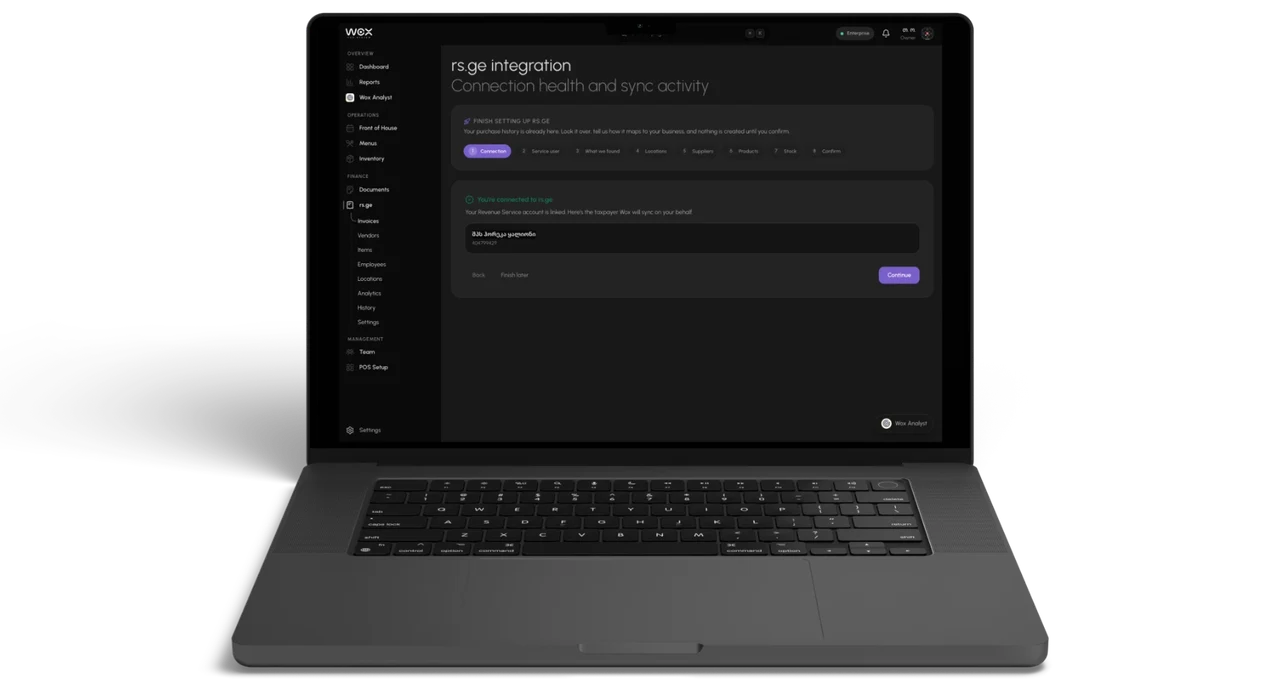
A recipe cost is only as good as the prices behind it. In Georgia most flour, dairy and egg deliveries come with an rs.ge waybill, so Wox reads prices from there. When you connect rs.ge, Wox imports twelve months of waybill history and then syncs every night. It proposes suppliers and matches waybill lines to your items, and nothing reaches stock until you have reviewed it. Each item builds up a price history you can look back on.
For suppliers outside rs.ge, invoices can be uploaded as documents and read into Wox, with a preview to check before anything is saved. The documents and invoices guide covers that flow, and price variance shows how to spot a supplier whose prices are moving. When you know your numbers, negotiating with suppliers becomes a conversation about facts.
Ingredient stock and par levels
Wox tracks stock by storage area: the dry store for flour and sugar, the cold room for butter and dairy, the freezer for prepared doughs, the shelf where packaging lives. Set a par level for each key item and you get a low-stock alert in the app and as a push notification before you run short. Running out of butter on a Friday afternoon is a problem you can see coming on Wednesday.
If you record expiry dates on dairy and other short-life items, Wox warns you before they pass and writes off what has expired as waste. The par levels guide explains how to choose levels, and the inventory page shows the stock screens.
Selling at the counter
The Wox POS handles the counter: quick sales and cash or card payments. Each sale deducts the product's recipe from stock, so ingredient levels stay accurate without a separate step. If the internet drops during the morning rush, the POS keeps selling offline and syncs when the connection returns.
Guests who want to see the full range can scan a free QR menu in Georgian, English or Russian, with prices that always match the till.
Overproduction becomes visible
The trays left at closing are where a bakery's margin most often leaks away. To count them, set up the products you bake in batches as house-made items: each bake is recorded as a batch, every counter sale draws one piece from it, and what is left at closing is logged as waste with a reason, such as unsold, damaged or burnt. Stock goes down by that amount and the reason stays on the record.
After a few weeks the waste report answers the questions that matter. Which products are left over most often? Which days? Is it the Monday batch of croissants, or the cakes made for a weekend that rained? With that, production can be adjusted product by product. The waste tracking guide and how to reduce food waste go further.
Asking the numbers
On paid plans, Wox Analyst answers questions in Georgian or English from your live data: which products had the most waste last week, how much the cost of a croissant has changed since summer, what sold best on Saturday. It can propose a waste entry or a new par level, and nothing changes until you confirm it. Its morning insights can also flag a jump in food cost after a supplier price rise.
Getting started
Start with the products that sell most and the bases they share, the doughs and creams. Add their recipes, connect rs.ge so the prices are real, and set par levels for flour, butter and eggs. Then begin logging what is left at closing. There is a Free plan, and paid plans start at 99 GEL per month; see pricing or book a demo. If you also serve coffee, the cafés page covers the counter side in more detail.
Questions people ask
Can Wox calculate the cost of each product?
Yes. Recipe costing uses your current ingredient prices, including house-made bases like doughs and creams, so product costs update when supplier prices change.
How do I track overproduction?
Record each bake of the products you want to track as a batch, then log what is left at closing as waste with a reason. Waste reports then show which products and days produce the most waste, so you can adjust production.
Where do ingredient prices come from?
Mostly from rs.ge waybills, which Wox imports and syncs nightly after you connect. Each line is reviewed before it reaches stock, and every item keeps a price history.
Can I record a batch of dough or cream?
Yes. House-made items have their own recipe and yield. Recording a batch takes the ingredients out of stock, adds the finished batch and calculates its cost per unit.
Step-by-step guides
Recipe Costing and Food Cost Percentage Tracking
How to link recipe costs to live invoice data so your food cost percentage stays accurate as ingredient prices change.
Restaurant Food Waste Tracking and Reduction
How to track, report, and reduce wastage of food in restaurants across locations to protect margins and lower food cost.
Food Cost Variance and Price History Analysis
How to track supplier price changes over time and use food cost variance analysis to protect restaurant margins.
From the blog
How to Calculate and Control Restaurant Food Cost Percentage
Food cost percentage is the single most important financial metric for restaurant profitability. It measures how much of every revenue dollar goes toward the ingredients on each plate. For an industry where average net profit margins hover between 3% and 5%, even a one-point shift in food cost can mean the difference between a profitable quarter and a losing one. This guide explains exactly how to calculate food cost percentage, what the benchmarks are by restaurant type, and which operational strategies bring that number under control.
How to Reduce Food Waste in Your Restaurant: A Data-Driven Guide
U.S. restaurants and foodservice businesses generated 12.5 million tons of surplus food in 2024, and 85.9% of it went to landfill or incineration. For an industry operating on 3% to 5% net margins, waste is not just an environmental issue—it is a direct and significant drain on profitability. This guide covers the primary causes of restaurant food waste, how to measure it, and the operational strategies that produce the largest reductions.
How to Negotiate Better Prices with Restaurant Food Suppliers
Ingredient costs are the largest controllable expense for most restaurants, typically consuming 28% to 35% of revenue. Even small improvements in supplier pricing have an outsized impact on profitability. A 3% reduction in food cost for a restaurant generating $1 million in annual sales translates to $30,000 in additional profit—a meaningful sum in an industry where average net margins are 3% to 5%. This guide covers the strategies, tactics, and preparation needed to negotiate effectively with food distributors and suppliers.
Wox for other businesses
Bakeries and pastry shops
See Wox with your own menu
Book a short demo and we will set it up around how your business actually runs, or start on the free plan today.