

Bars and wine bars
Bar management software with tabs, stock control and manager approvals
Bars hold some of the most valuable stock in hospitality and some of the hardest to keep track of. Wox keeps tabs simple for the team and makes stock, voids and cash clear for the manager.
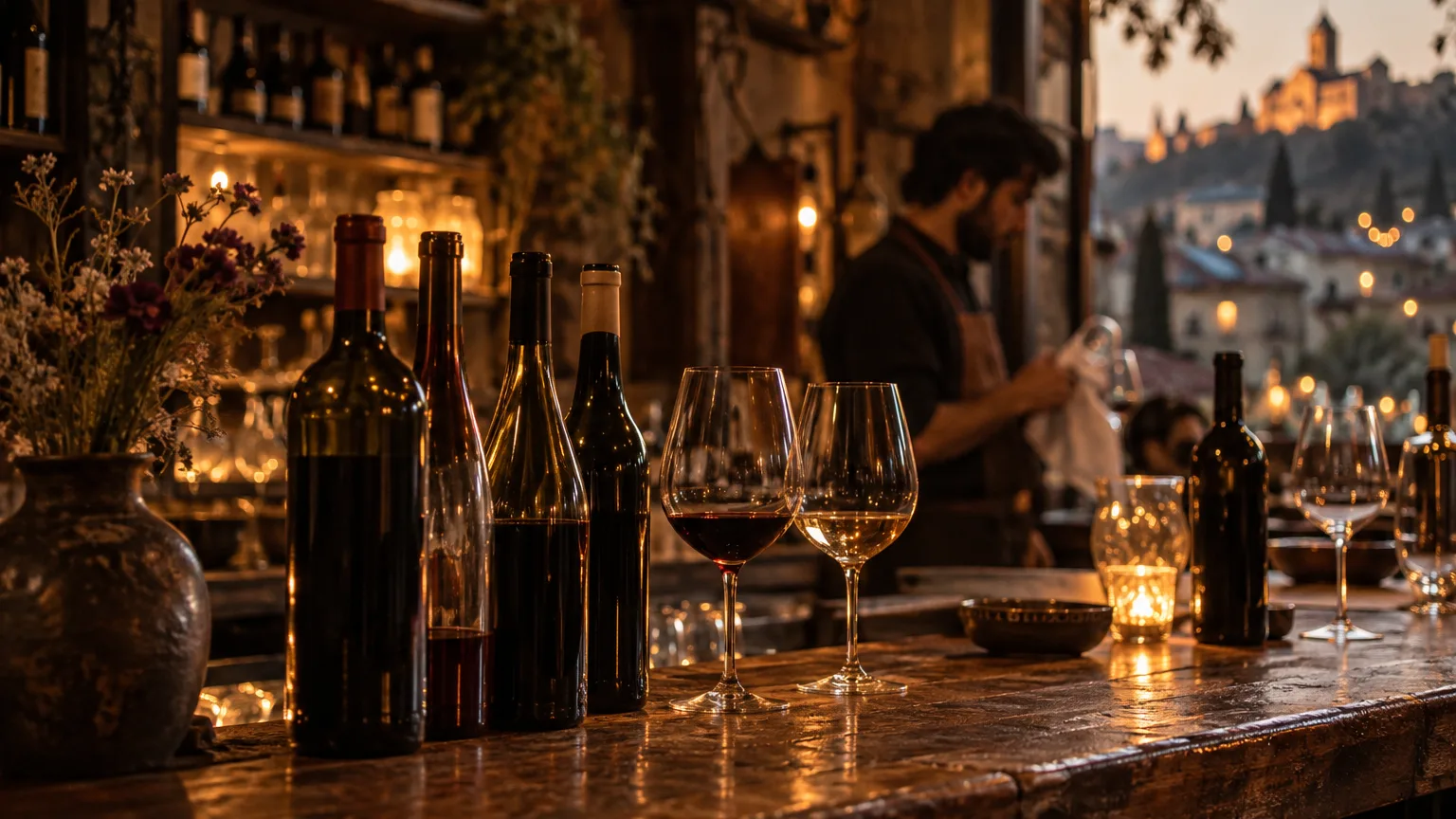
On a Friday in a wine bar in Sololaki, the night runs on small decisions made quickly. A table orders a bottle of qvevri Rkatsiteli, the group at the counter keeps adding glasses of Saperavi, someone asks for a round of chacha on the house for a birthday. By one in the morning there are a dozen open tabs and a bartender who has been on their feet for seven hours.
Every one of those moments touches the most expensive stock in the building. A bottle that goes missing is not a few tetri of onion; it can be a hundred lari. That is why bars need two things that pull in different directions: a till that never slows the bartender down, and a record that the manager can trust the next morning.
Where bars lose money
- Shrinkage between counts. Bottles are valuable and easy to lose track of, and without regular counts the gap only shows up as a weak month.
- Voids and comps without a trail. When anyone can void an item, nobody can tell a mistake from a giveaway.
- Tabs that are slow to settle. Large groups and long nights make closing tabs slow and easy to get wrong.
- Distributor prices that drift. A price increase on one brand, absorbed for months, quietly lowers the margin on every glass.
Tabs that stay simple
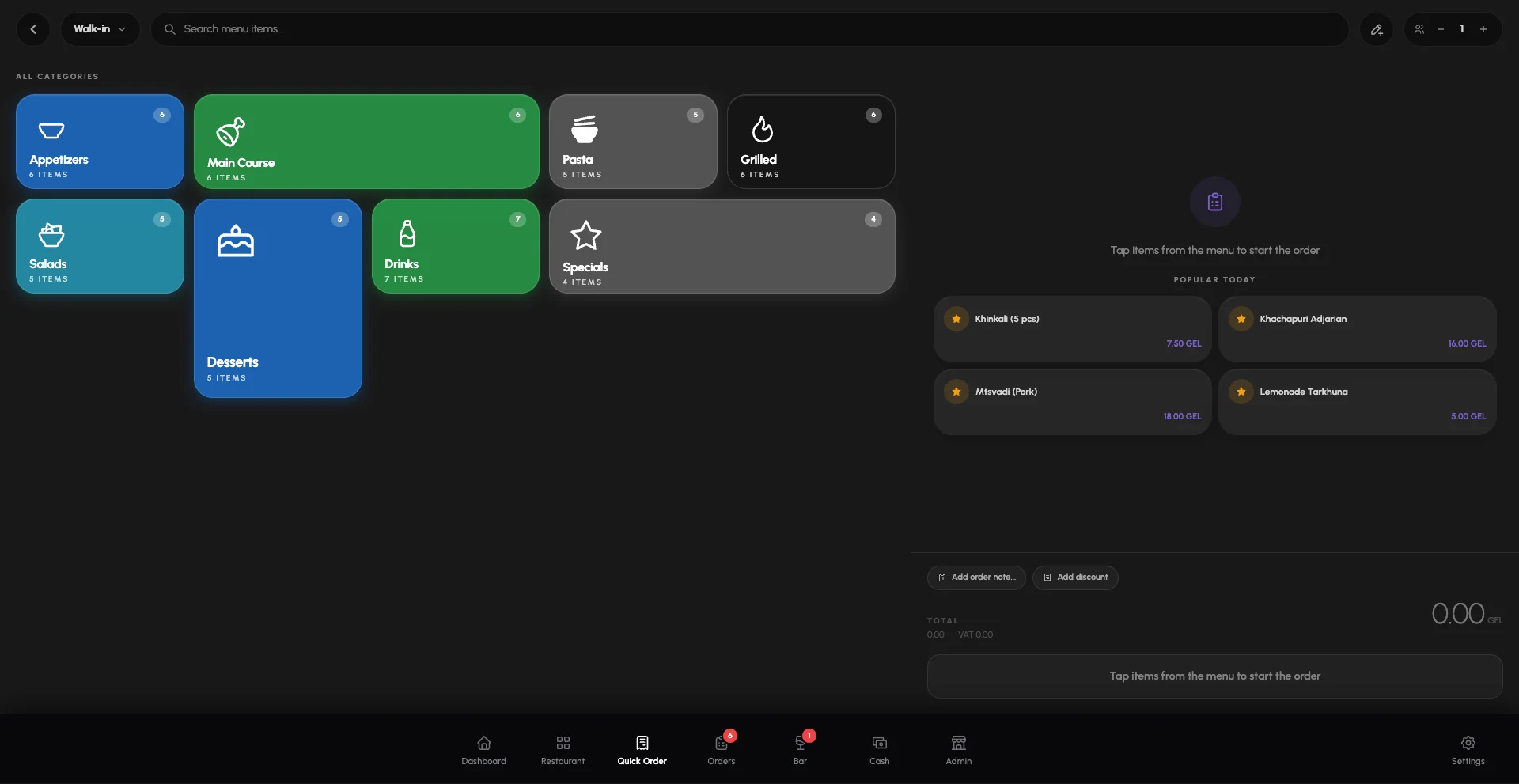
The bar tabs screen in the Wox POS is made for walk-in guests without a table. A tab opens with a name, and optionally a phone number, a card reference or a note. Drinks are added from bar categories that come first on the screen, and repeating a round is a quantity change, not a new search.
Tabs show how long they have been open. After 45 minutes a tab is highlighted, and after 90 it is marked as a risk, so a tab that has drifted to the end of the bar without a payment is noticed before the guest leaves. When two groups join up, one tab can be moved onto another. When the guest settles, the tab goes to the normal payment screen for cash, card or both.
If your counter has stools, the floor plan can treat it as a bar corner, where each seat keeps its own check. Those checks behave like any table: they fire to the kitchen if the bar serves food, take tips, and can be split or merged when friends decide to pay together after all.
Every exception has a name
Voids, comps and discounts on a check can require a manager's PIN. Voiding a whole tab always needs a reason and a manager. The same applies to the cash drawer: a safe drop, a paid-out to the ice supplier or opening the drawer without a sale all ask for a manager override.
This does not slow a good bar down. It means that the morning after, every void and every free round has a person and a reason attached. A void report you can read is the difference between knowing that one bartender makes the same mistake every Saturday and simply knowing that the numbers are off. Team roles and permissions explains who can do what.
From bottles to glasses
Wine and spirits are bought by the bottle and sold by the glass, the shot or the cocktail. In Wox a drink can carry a recipe: a glass of Saperavi is 150 millilitres of the bottle, a chacha sour is a measure of chacha, lemon and syrup. Units convert between how you buy and how you pour, so each sale draws down the right fraction of a bottle.
House-made ingredients work the same way. A batch of syrup or a pre-mixed cocktail can have its own recipe and yield. Recording a batch takes the ingredients out of stock and puts the finished batch in, so its cost per serving is known and the cocktails that use it deduct from it.
Counting what is actually on the shelf
Recipes tell you what should be on the shelf. Counts tell you what is. In Wox you count by storage area, the back bar, the cellar, the fridge, and each count records the expected quantity at the moment you counted, so the bar can keep trading while the count is reviewed. A manager approves it, and only the difference is applied to stock.
The result is an over and short report by item. A shortage is kept apart from waste: a bottle dropped behind the bar is logged as waste with a reason, while a bottle that simply is not there shows up as a shortage. Mixing the two is how bars end up explaining losses that never happened, or missing ones that did. For any item, the stock history lists every sale, delivery, count and adjustment that moved it. The inventory management guide covers the routine.
 Wox
WoxInventory Count
Walk-In Cooler · Downtown
A bottle that goes missing is not a few tetri of onion; it can be a hundred lari.
Distributor prices over time
Most bars in Georgia buy from a handful of wine producers and spirits distributors, and their deliveries arrive with rs.ge waybills. Wox connects to rs.ge, imports twelve months of history and syncs every night. It proposes suppliers and matches lines to your items, and nothing reaches stock until you review it.
Each item then has a price history. When a distributor raises the price of a brand, it is visible as a dated change on the item and in supplier records, and recipe costs move with it. The price variance guide shows how to spot this early, and why food cost variance happens applies to drinks just as well.
The right screens for the right people
Bartenders see the POS and their tabs. Managers see stock, counts, reports and approvals. Roles are set per person, so each member of the team works with the screens their job needs. The team features page shows how roles and PINs are set up.
Closing the night
At close, the drawer is counted against its own record of the float, cash sales, drops and paid-outs, and the count can be blind if you prefer. Differences are recorded with a reason. On paid plans, Wox Analyst can answer questions about the night in Georgian or English, from how much wine sold by the glass to how the cash count compared with the drawer, and its morning insights can flag a cash shortage at close. Any change it proposes waits for your confirmation.
A wine list guests can read
Tourists in Tbilisi and Batumi often want to know what they are ordering. The free QR menu shows your list in Georgian, English and Russian, with prices that always match the POS, and a wine that has run out stops appearing once it is marked unavailable.
Getting started
Start by setting up the drinks menu and recipes for your pours, then do a first full count by storage area so stock begins from the truth. Connect rs.ge to bring in distributor prices. There is a Free plan, and paid plans start at 99 GEL per month; see pricing or book a demo. If your bar is part of a restaurant, the restaurants page covers the floor and kitchen side.
Questions people ask
Can Wox require a manager for voids?
Yes. Voids, comps and discounts can require a manager PIN, and voiding a whole bar tab always needs a reason and a manager. Each one is recorded with the person who approved it.
Can I keep tabs open through the night?
Yes. Tabs stay open while guests keep ordering, and Wox highlights tabs that have been open for 45 and 90 minutes so none are forgotten.
Can guests at the bar split the bill?
A named tab settles as one check. For guests on stools who want to pay separately, set the counter up as a bar corner, where each seat has its own check that can be split, merged and given a tip.
Does Wox track supplier price changes?
Yes. Price history per item, fed by rs.ge waybills, shows what changed, when and with which supplier, and recipe costs update with it.
Step-by-step guides
Restaurant Inventory Counting and Stock Management
Best practices for restaurant inventory management — storages, counts, low-stock control, and replenishment planning to reduce food cost.
Restaurant Team Roles and Permissions
How to set restaurant team access so daily work is fast while sensitive actions like food cost data and purchasing stay controlled.
Food Cost Variance and Price History Analysis
How to track supplier price changes over time and use food cost variance analysis to protect restaurant margins.
From the blog
10 Inventory Habits That Lower Food Cost and Keep Kitchens Running Smoothly
Practical guidance for chefs, managers, and restaurant owners
Food Cost Variance: A Worked Example and How to Find the Cause
A worked food cost variance example, the six causes behind most gaps between actual and theoretical food cost, and the week-long tests that tell you which one is costing you money.
10 Restaurant Numbers Owners Should Review Every Week
A simple scorecard for margin, labor, menu, and operating discipline
Wox for other businesses
Bars and wine bars
See Wox with your own menu
Book a short demo and we will set it up around how your business actually runs, or start on the free plan today.